
What Happens If You Miss a Statutory Inspection?
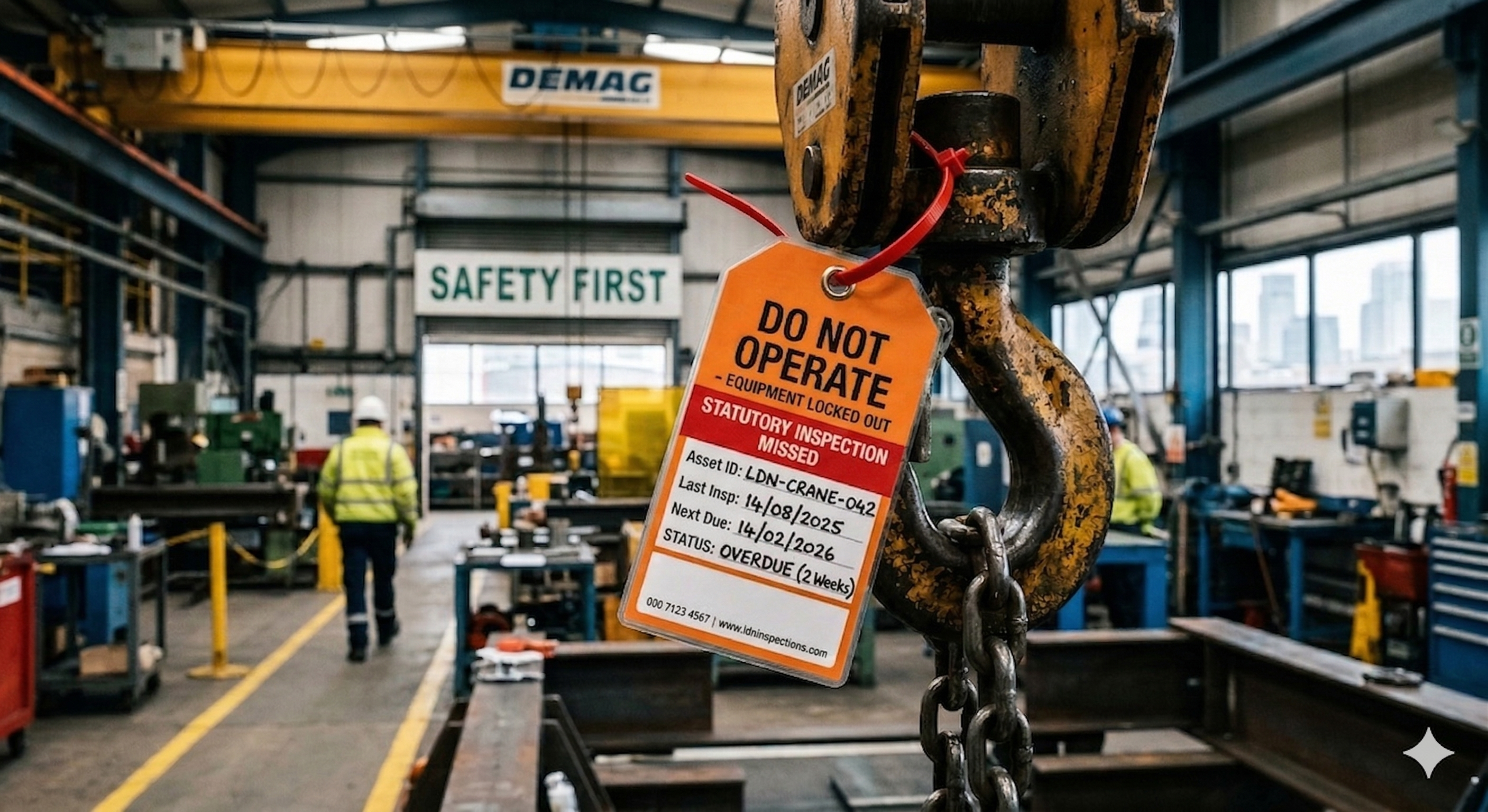
Statutory inspections are a strict legal requirement for many types of workplace equipment, yet missed or overdue inspections remain one of the most common compliance failures identified during audits and Health and Safety Executive (HSE) visits. Whether it's a LOLER thorough examination, a PSSR inspection, or PUWER-related checks, failing to meet statutory deadlines can have serious legal, financial, and safety consequences.
At LDN Inspection Services, we regularly see the fallout of delayed compliance. This article explains what actually happens if a statutory inspection is missed, why it matters, and what duty holders should do if they discover an inspection is overdue.
What Is a Statutory Inspection?
A statutory inspection (or examination) is a legally required check carried out under specific UK health and safety regulations to ensure equipment remains safe to use. Common examples include:
- LOLER -- Thorough examination of lifting equipment and accessories (e.g., cranes, hoists, forklift trucks).
- PSSR -- Examination of pressure systems under a Written Scheme of Examination (e.g., air compressors, steam boilers).
- PUWER -- Inspections of work equipment where risks exist from deterioration or abnormal conditions (e.g., power presses, industrial machinery).
Unlike routine maintenance or in-house daily checks, statutory inspections are mandatory, must meet defined criteria, and require a competent, independent person to carry them out.
Is Missing a Statutory Inspection a Legal Breach?
In most cases, yes.
If an inspection exceeds its maximum interval, the equipment is technically non-compliant, even if it appears to be in perfect working condition. UK health and safety law is clear: statutory inspection periods are not optional and cannot be extended informally without proper justification and documentation from a competent person.
Operating equipment without a valid inspection places an employer or duty holder in breach of legislation, even if no incident has occurred.
What Are the Immediate Risks?
1. Increased Risk to Safety
Statutory inspections are designed to identify:
- Wear, fatigue, or corrosion
- Safety-critical defects
- Changes in operating conditions
- Deterioration that isn't obvious during daily checks
Missing an inspection removes an important layer of protection, dramatically increasing the likelihood of equipment failure, workplace injury, or dangerous incidents.
2. Enforcement Action by the HSE
If the HSE identifies missed statutory inspections during a visit or investigation, they may issue:
- Improvement Notices requiring compliance within a set timeframe.
- Prohibition Notices stopping the use of the equipment immediately.
- Prosecution, particularly where risk or harm is evident.
Even an honest administrative oversight can trigger enforcement if it relates to safety-critical equipment.
3. Invalidated Insurance Cover
Many commercial insurers require evidence that statutory inspections are up to date as a condition of their policies. If an incident occurs and inspections have been missed, insurers may:
- Refuse to cover claims
- Reduce payouts
- Challenge liability
This can result in devastating financial exposure for a business.
Does Equipment Have to Be Taken Out of Service?
Often, yes.
If a statutory inspection is overdue, best practice -- and in some cases a legal necessity -- is to remove the equipment from service immediately until it has been examined and declared safe. Continuing to use equipment without a valid inspection can significantly worsen the consequences if something goes wrong.
What If You've Just Discovered an Inspection Was Missed?
This happens more often than many organisations realise. The key to mitigating the fallout is how quickly and appropriately you respond.
A competent response typically includes:
- Stopping use of the affected equipment where appropriate.
- Arranging an urgent statutory inspection with an independent provider.
- Reviewing why the inspection was missed in the first place.
- Updating inspection schedules and assigning clear responsibilities.
- Documenting all corrective actions taken.
Demonstrating proactive management can significantly reduce your enforcement risk if the issue is identified externally.
Can Inspection Intervals Be Changed?
In some cases, inspection intervals can be shortened or extended, but only under specific, highly regulated conditions:
- LOLER intervals may be varied, but only based on a competent person's formal written scheme of examination.
- PSSR intervals must strictly follow the equipment's Written Scheme of Examination.
Most importantly, intervals cannot be changed retrospectively just to cover up a missed inspection.
Common Reasons Statutory Inspections Are Missed
- Poor asset registers or incomplete equipment lists.
- Confusion between standard PUWER maintenance and statutory thorough examinations.
- Changes in equipment use, location, or company ownership.
- Lack of clear responsibility within the management team.
- Over-reliance on third-party service providers without internal oversight.
Many of these issues can be easily identified and resolved through a structured review of your inspection schedules.
Why Documentation Matters
Even if inspections are carried out on time, missing or incomplete records can still result in a non-compliance ruling. Duty holders must always be able to produce:
- Reports of thorough examination
- Written schemes (where applicable)
- Evidence of defect management
- Records of equipment removal or repair
Good documentation demonstrates control, competence, and a commitment to compliance.
The Bigger Picture: More Than Just Compliance
Statutory inspections are not just a box-ticking or paperwork exercise. They exist to:
- Prevent serious injury and fatalities.
- Identify hidden or progressive mechanical failures.
- Protect operators, contractors, and the public.
- Support safe, reliable, and uninterrupted operations.
Consistently missing inspections often points to wider issues in a company's asset management and overall safety culture.
Final Thoughts
Missing a statutory inspection is never something to ignore. While the consequences can be serious, early action, transparency, and competent support can significantly reduce your risk and help restore compliance quickly.
For organisations managing multiple types of equipment, regular reviews of inspection schedules, responsibilities, and documentation are the most effective ways to stay compliant and avoid costly mistakes.
Work Equipment Inspection
LDN Inspection Services provides thorough examinations and statutory inspections for lifting equipment, pressure systems, and work equipment across the UK. Our competent engineers deliver fast, reliable reports to keep your operations safe and compliant.
Book InspectionFrequently Asked Questions
In most cases, yes. If a statutory inspection has exceeded its maximum interval, the equipment is technically non-compliant under UK health and safety law. Operating it places the employer or duty holder in breach of legislation such as LOLER 1998, PSSR 2000, or PUWER 1998, even if no accident has occurred and the equipment appears to be in working order.
Yes. The Health and Safety Executive can issue Improvement Notices, Prohibition Notices, or pursue prosecution based solely on non-compliance with statutory inspection requirements. An actual incident does not need to have taken place for enforcement action to be taken. Even an administrative oversight can trigger enforcement if it relates to safety-critical equipment.
Many commercial insurance policies require evidence that statutory inspections are up to date as a condition of cover. If an incident occurs and inspections have been missed, insurers may refuse to cover claims, reduce payouts, or challenge liability entirely. This can result in significant uninsured financial exposure for the business.
You should immediately stop using the affected equipment where appropriate, arrange an urgent statutory inspection with an independent competent provider, review why the inspection was missed, update your inspection schedules and assign clear responsibilities, and document all corrective actions taken. Acting quickly and transparently can significantly reduce enforcement risk.
In some cases, inspection intervals can be shortened or extended, but only under specific regulated conditions. LOLER intervals may be varied based on a competent person's formal written scheme of examination, and PSSR intervals must strictly follow the equipment's Written Scheme. Intervals cannot be changed retrospectively to cover up a missed inspection.
LDN Inspection Services
We are a specialist inspection body delivering statutory examinations of lifting equipment, pressure systems, and work equipment to businesses across the United Kingdom. Our team of competent engineers is committed to helping duty holders meet their legal obligations efficiently and without disruption.